
Rewards
Symbiotic can be considered an exchange hub between basically 3 parties: stakers, operators, and networks.
- The stakers provide capital for the operators to use in favor of the networks
- The operators provide maintenance of the networks’ liveness in a valid manner
- The networks receive a security for their products depending on the economic side provided by the stakers and on the functioning side provided by the operators
Based on these exchange statements, it can be seen that the stakers and the operators provide services to the networks. Therefore, the networks are responsible for giving them something in exchange, and these are rewards.
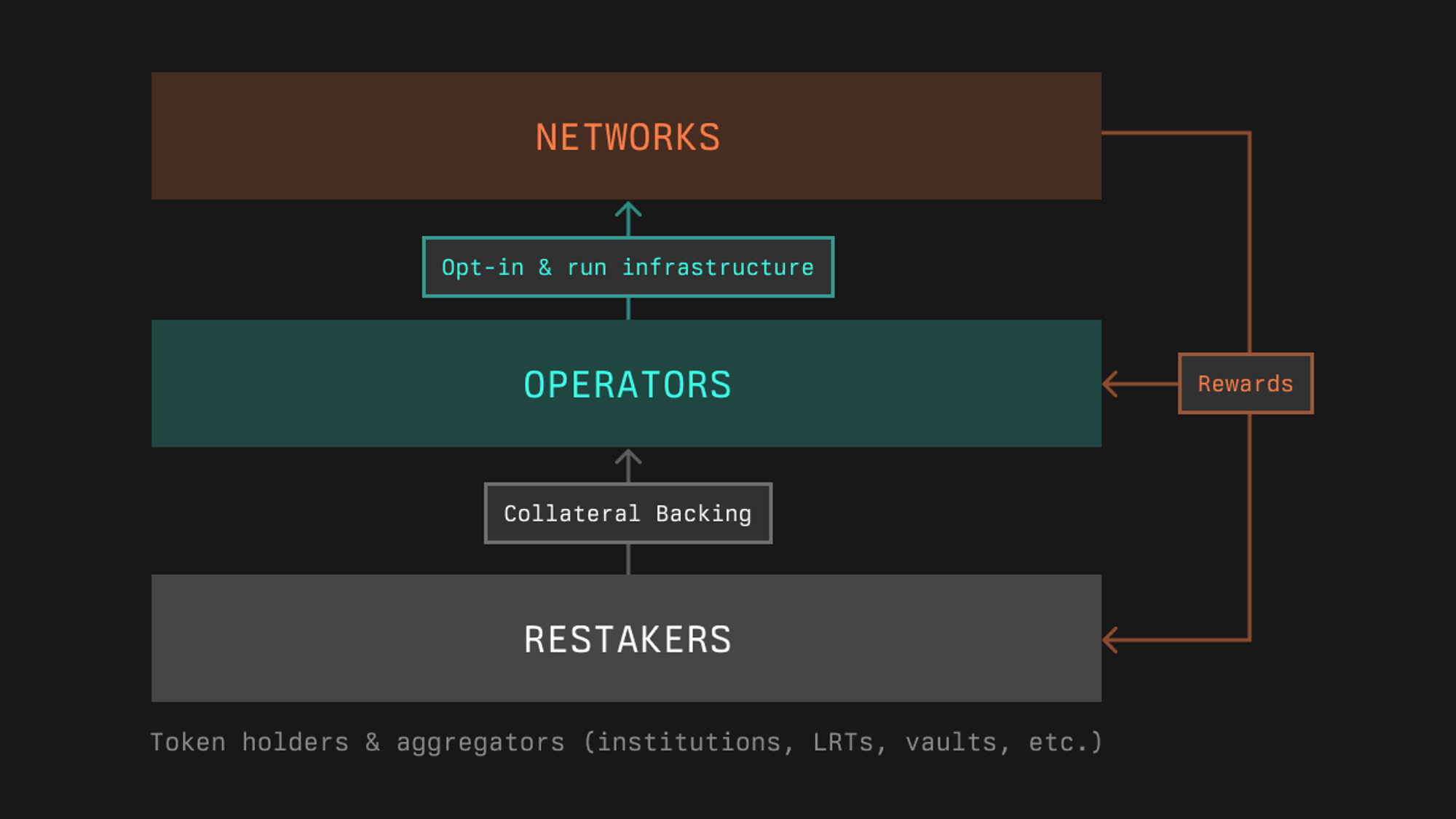
Rewards Distribution
Symbiotic Core contracts don’t contain the rewards logic enshrined. However, they provide enough data for external contracts to be able to create a rewards distribution, so anyone can create their own implementation of it.
Rewards can be divided into staker and operator rewards:
- The staker rewards can be provided depending purely on the provided stake’s value (the representation of value can differ from the standard $ view depending on alignment / token distribution / other factors)
- The operator rewards can be provided depending on the economic factors similar to the above ones and on the operators’ performance metrics (e.g., number of tasks completed / liveness / validators’ distribution)
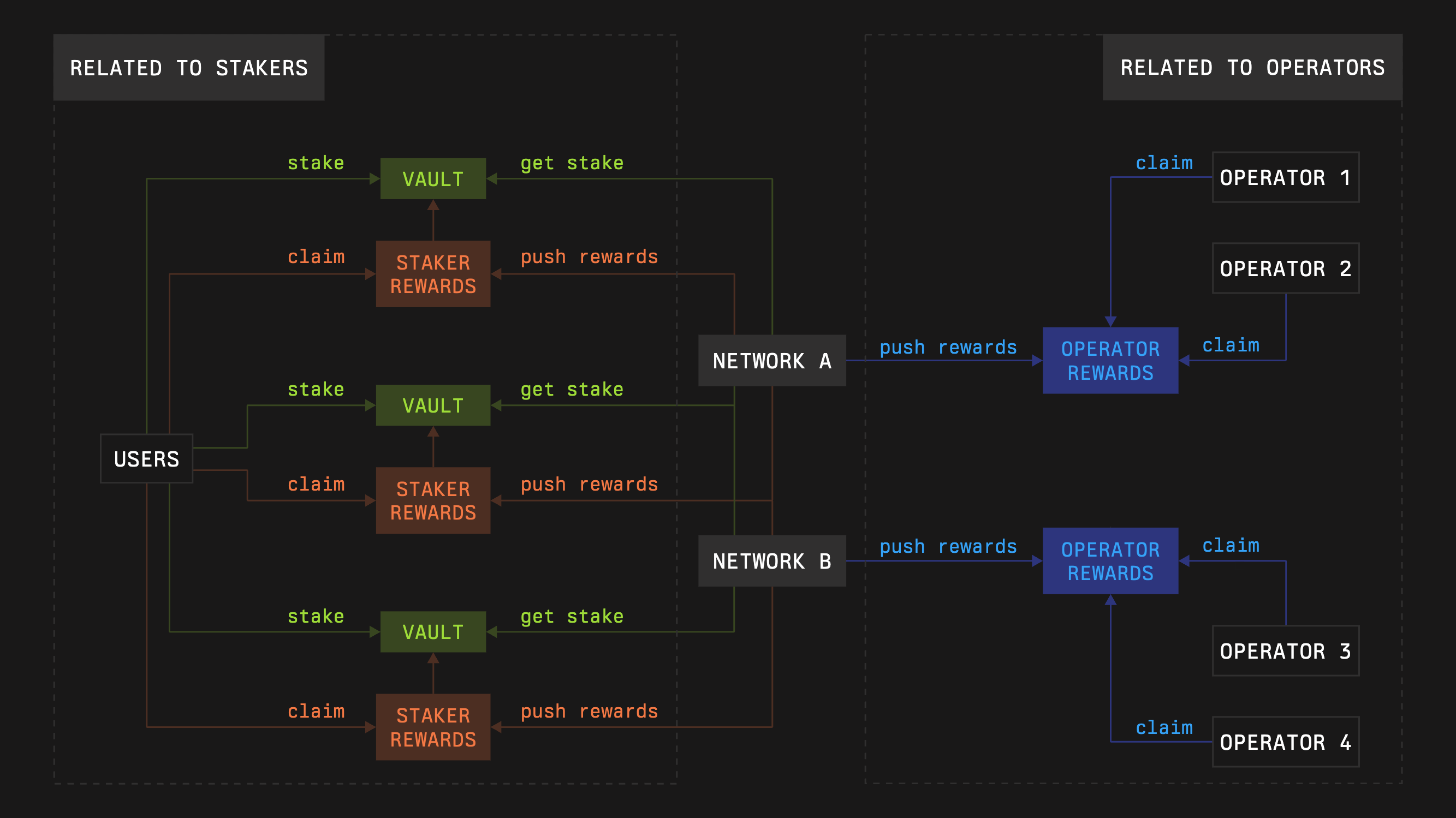
We provide en extensive framework implementation to facilitate rewards distribution.
Staker rewards
Stakers provide the collateral that backs operators’ actions on each network. By depositing into a vault, they are taking on the risk that operators or networks may misbehave and that part of their stake could be slashed. In return, they should be compensated for supplying this economic security and for locking capital into a specific strategy or risk profile.
Networks pay stakers using the value they generate. This can come from protocol revenues such as fees and spreads, from payments made by external clients who consume the network’s services, or from token inflation that is explicitly allocated to security and growth. Through Symbiotic’s rewards contracts, these streams are routed back to stakers in a way that matches the vault’s configuration and the networks it secures.
Operator Rewards
Operators keep validators online, run middleware binaries, sign messages for bridging and oracle updates, or execute DeFi strategies on behalf of a network. Because they are spending time, capital, and operational effort to provide these services, they need to be compensated for them. Networks pay operators out of the value they generate, for example protocol fees, revenues from external clients that use their services, or token inflation allocated to operations and security.
Symbiotic’s rewards framework is flexible enough to route operator payments in different ways, for example:
-
The network calculates rewards off chain and sends periodic batch transfers to operators.
-
The network calculates rewards off chain and publishes a Merkle tree, allowing each operator to claim its own share.
-
The network keeps reward accounting fully on chain inside its middleware and distributes rewards directly from that on chain state.
In every case, the goal is the same: make sure operators are paid in a way that matches the work they do and the risk they take.