
Liquidity Management
Problem
Overcollateralized designs trap capital and do not scale. Many eligible assets, especially RWAs, are illiquid or settle slowly, so redemptions either take a haircut through discounts and slippage or require waiting through withdrawal periods.
Solution
Symbiotic lets you unlock the liquidity already sitting in the Symbiotic vault and turn it into production credit. No new collateral posted upfront. You get capital efficiency on day one while keeping real economic guarantees because the vault can be slashed if policy is breached.
For stablecoin issuers and lending markets this means instant liquidity for otherwise illiquid RWAs and smoother redemptions without forced discounts. For intent and execution use cases this means you can run the action now and settle later with a clear rebalance window. Fees flow to the operator on verified completion and the system enforces that the vault balance is restored on time, or slashing applies. The result is more volume, faster time to market, and stronger trust with borrowers and regulators since every action is covered by stake secured guarantees.
Symbiotic can also help bridge policy across chains through the Symbiotic Relay. It carries the attestation from the chain where users deposit to the chain where they receive access, so you can originate on any network and serve users everywhere with one verifier and one format. Add a new chain by deploying a thin adapter and keep your existing issuer or lending stack unchanged.
In short, Symbiotic turns idle vault liquidity into safe productive credit, gives you instant usability for slow to settle assets, and backs every promise with real money at risk.
How it Works
Here’s the exact flow for Symbiotic using the Relay SDK for epoch management:
- The network defines the vault to draw from, the rebalance window, and the payment rules.
- The network slashes the Symbiotic vault to access liquidity for the action.
- Liquidity is used for the intended purpose, to early-redeem illiquid RWAs or to fulfill an intent.
- The associated operator executes the intent, and funds are delivered to the user
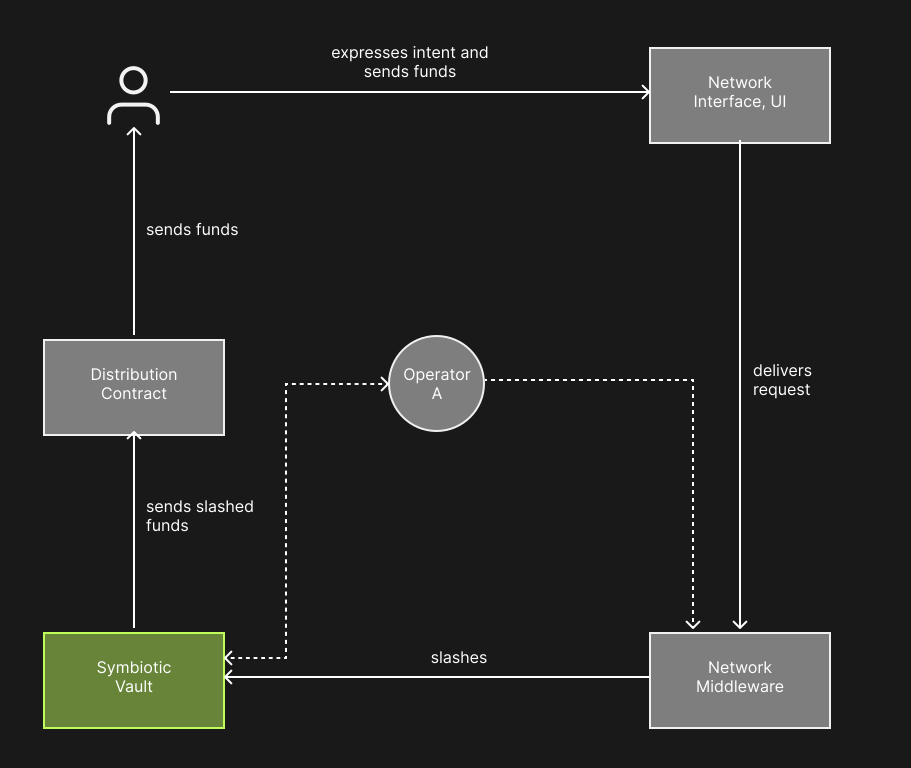
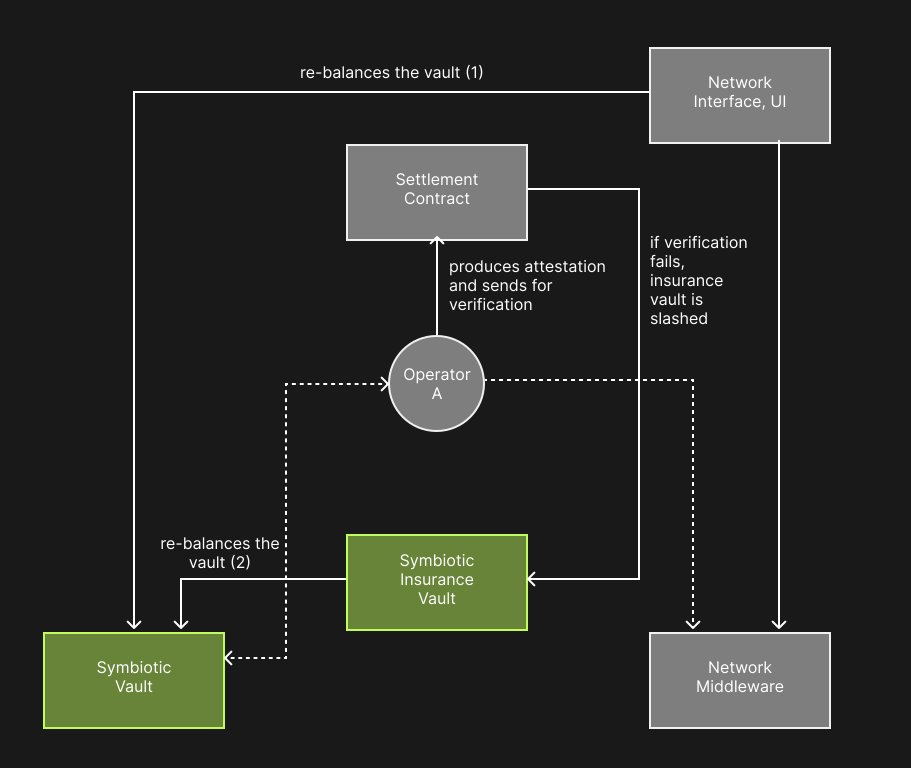
- The network manager or operator rebalances the Symbiotic vault by adding the collateral deposited by the user when expressing the intent.
- The operator produces an attestation that the intent was executed and the user received the funds.
- The settlement contract verifies the attestation and receives the current vault state for collateral valuation in the same epoch.
- If policy is satisfied, the contract triggers payment to the operator or solver.
- If policy fails or the restore window is missed, the operator or solver is slashed. If they have a protection layer in another Symbiotic vault, slashing is applied there according to policy.
Application Examples
- Intent Fulfillment
An application or network needs to execute a user intent, for example settling an order, bridging a payment leg, or performing a market action, without waiting for fresh collateral. The network designates a Symbiotic vault as the backstop, sets a restore window and payment rules, and draws liquidity by slashing the vault to execute the intent immediately so the user receives the funds or outcome.
The associated operator then produces an attestation that the intent was executed correctly and on time. The settlement contract verifies the attestation and, before the epoch ends, the manager or network admin replenishes the vault.
If everything checks out, the contract releases the operator fee. However, if the proof is missing, late, or inconsistent with the vault state, the operator is slashed. If the operator has a protection layer in another Symbiotic vault, slashing is applied there according to the configured rules.
- Illiquid RWA Early Redemption
A stablecoin issuer or lender faces a redemption request while part of the reserves sit in illiquid or slow-to-settle RWAs. Instead of forcing users to wait through withdrawal periods, the issuer taps the Symbiotic vault as a secured liquidity buffer. The network defines the qualified vault, the maximum early redemption headroom, a restore window aligned to the RWA settlement horizon, and the fee model. Liquidity is drawn from the vault to pay the user immediately, in return for a small fee.
An operator or designated agent executes the redemption flow and produces an attestation that the user received funds. The settlement contract verifies the attestation and, before the epoch ends, reads the current vault state to confirm the required collateral is present for that same epoch. The network manager must deposit the funds back into the Symbiotic vault before the epoch ends; once that balance is observed in-epoch, the contract releases the operator’s fee and the restore window closes. If the deposit is not observed before epoch end, slashing applies to the responsible party or their protection layer.