
Oracle Networks and Data Feeds
Problem
Most oracle systems are rigid and permissioned, with fixed committees and bespoke integrations per chain. Expanding coverage is expensive, updates can be slow or stale, and manipulation risk remains due to weak incentives, limited slashing, MEV at publication time, and unclear dispute processes. Portability across chains is poor and auditability is fragmented.
Solution
Relay acts as a universal oracle engine. Any approved operator can fetch off-chain data and produce a stake-backed attestation that is:
- Verifiable on chain with BLS aggregation and anti-replay.
- Backed by bonded validators with explicit slashing for bad data, equivocation, or missed SLAs.
- Programmable via schemas for prices, TWAPs, risk scores, proof-of-reserves, or custom metrics.
- Cheaper at scale by batching many feed updates into one verification.
- Composable across EVMs and compatible with CCIP-style routing through thin adapters.
- Auditable with on-chain receipts and clear freshness guarantees.
How it Works
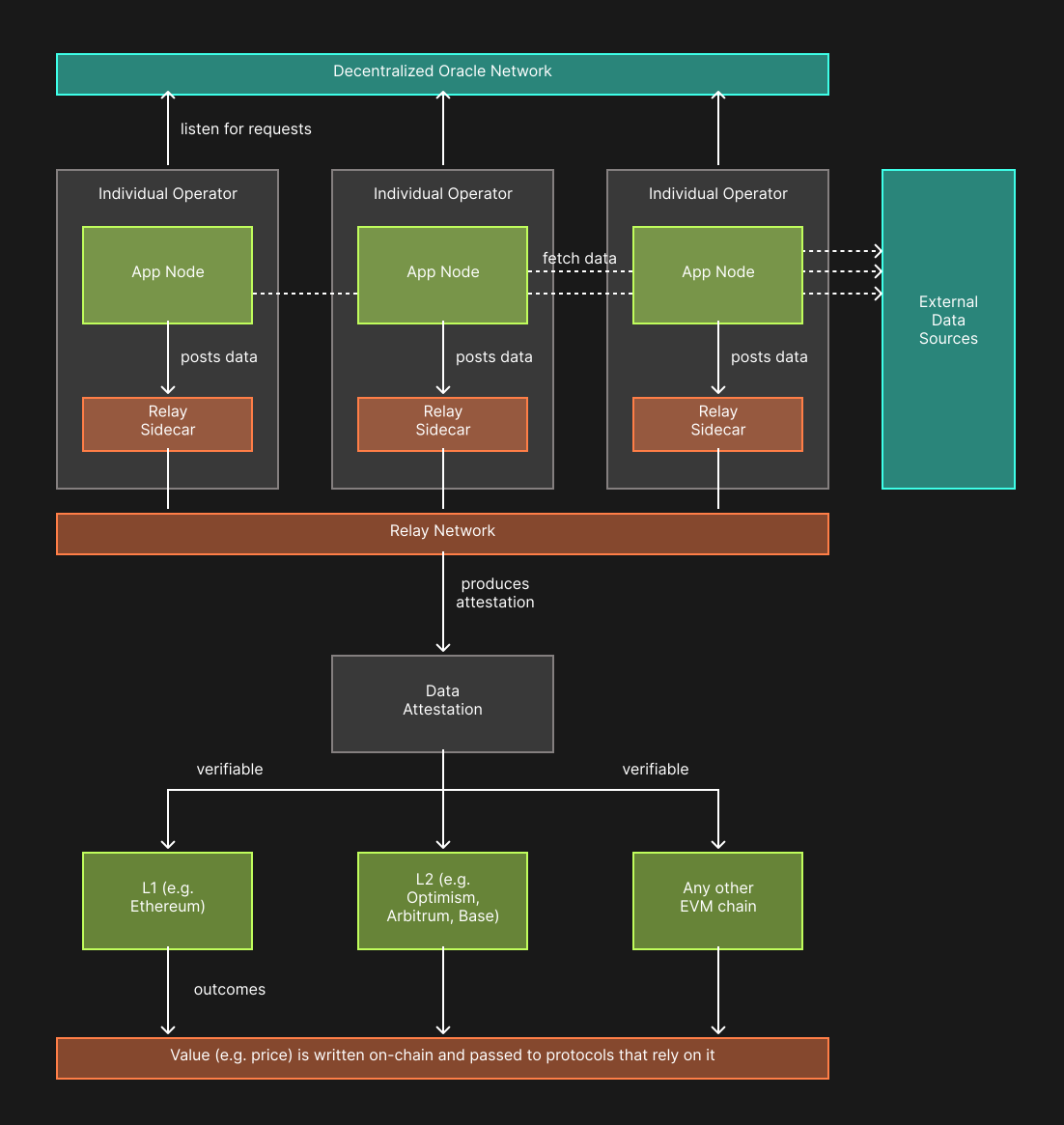
- Register and bond. Operators join the feed and lock stake as collateral.
- Define the feed. You set what data to track, how often to update, how to combine sources, and the service levels.
- Collect and compute. Operators fetch data from chosen sources and calculate the feed’s current value.
- Attest. Each operator signs the result with timing and round details.
- Aggregate. The signatures are combined into a single proof for that update window.
- Verify on chain. A verifier checks that enough staked operators signed, the update is fresh, and it is not a replay.
- Publish or trigger. The value is written on chain or passed to protocols that use it.
- Dispute and slash. If an update is wrong, late, or inconsistent, anyone can dispute within a window and dishonest operators are slashed.
Application Examples
- DeFi price feeds
Pull quotes from major CEX and DEX venues, compute a median or short TWAP with venue weighting and outlier filters, then attest the value with a timestamp and deviation flag. Set a heartbeat and a max staleness window so lending and perp engines only accept fresh rounds. If an attested value is outside the allowed deviation band or uses stale sources, operators are slashable and the adapter will refuse the update.
- Perp funding and index price
Define an index basket per asset, sample every few seconds, and publish round values on a fixed cadence. Funding is derived from index minus mark with clamps and a rolling window, then attested and verified on chain so funding transfers and insurance accounting execute deterministically. Any missing interval or conflicting rounds within the window is disputable and can lead to slashing.
- Proof of reserves
Bonded operators produce a stake-backed, verifiable attestation of total reserves versus circulating liabilities, with timestamp, heartbeat, and deviation guards. The attestation is checked on chain for quorum and freshness; misreporting, conflicting rounds, or missed SLAs can be slashed against bonded collateral. After verification, adapters gate mint and burn so supply cannot exceed attested reserves, pause on staleness, and record every round for auditability.
- LST risk score
Compute a composite score from on chain metrics such as pool depth, oracle deviation to spot, withdrawal queue length, historical depeg distance, and validator set concentration. Publish the score on a regular cadence with thresholds that protocols map to collateral factors or caps. Large moves require multiple consecutive rounds to prevent whipsaw, while clear breaches can immediately tighten risk parameters.
- NFT floor price
Aggregate bids and sales from leading marketplaces, remove wash trades and self matches, and compute a robust floor using median of top bids with liquidity filters. Per collection feeds are attested with collection id, floor, and liquidity score; NFT backed lending vaults use the value with conservative haircuts and a freshness check. If market data is thin, the adapter can hold the last good value until quorum resumes.
- CCIP routing data
Publish per chain gas prices, route health, and token exchange rates that cross chain routers consume to select paths and set fees. Attest route liveness and recent failure counts so routers can avoid degraded links. Deviation guards and freshness windows ensure routers never act on stale or manipulated signals.